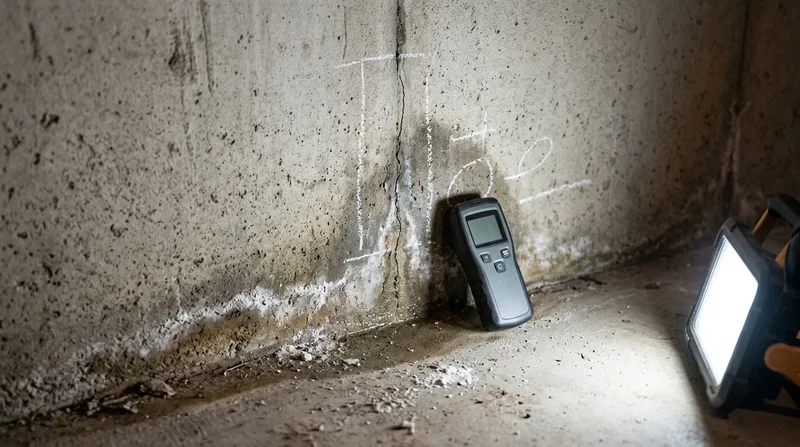




Springfield sits in the Mad River valley of Clark County, where glacial clay and till shed water slowly and push it toward basement walls every spring. The older east and north-side streets, plus the Snyder Park area, are lined with 1890s-1930s houses built on stone and early block foundations, many with hand-dug cellars. West and south-side ranches and split-levels from the 1940s through the 1960s sit on poured or block walls that crack as the ground shifts. Newer subdivisions on the edges of town sit on graded glacial till with shallower basements and walkout lots. If you have water in the basement, a wet basement after storms, or a sump pump that quit, a Free Basement Inspection in Springfield is the fastest way to find out what you are actually dealing with before you spend a dollar on repairs. We walk the walls, floor, cracks, sump system, grading, and gutters, take photos, and give you a written explanation of what needs fixing now, what can wait, and a straight answer if nothing is wrong. Start by reviewing our basement waterproofing service so you know what the inspection is measuring against.
Why a Free Basement Inspection Matters on Springfield's Clay and Old Masonry
The ground under Springfield is mostly glacial clay and till, which holds water and builds hydrostatic pressure against foundation walls long after the rain stops. Freeze-thaw cycles open cracks in older brick and stone masonry, snowmelt runs down the street into low yards, and the Mad River and local creeks rise fast after heavy storms. That combination is why so many basements here seep at the cove joint, show efflorescence, or take on water through a failed footing drain.
- We check for wall seepage, floor seepage, and water staining that tells us where the water table is pushing.
- We test the sump pump, check valve, and discharge line, because a dead pump is the most common cause of a flooded basement.
- We look at grading, downspout extensions, and window wells to see whether surface water is being dumped next to the foundation.
- We map cracks and note which ones need epoxy injection, polyurethane injection, or closer monitoring.
- We check for bowing walls and note whether carbon fiber straps or wall anchors are worth discussing.
An inspection tells you whether simple crack sealing is enough or whether the real problem is hydrostatic pressure that calls for an interior drain tile system.
Key info: On a 1920s brick house near Snyder Park, we often find a hand-dug cellar with a stone footing and no working drain tile. The seepage there is usually hydrostatic pressure, not a single crack, and the inspection is what separates the two before anyone quotes a repair.
For permit questions on structural foundation repair or drainage changes, the City of Springfield building department is the authority, and rules vary, so verify before any work begins: City of Springfield, Ohio.
How We Run a Basement Inspection in Springfield, Step by Step
We start outside and work in, because most basement water starts at grade. We walk the perimeter, check gutters and downspout extensions, look at window wells, and note low spots where snowmelt and storm runoff collect. Then we move inside to read the walls, floor, and sump system, and we photograph everything so you see what we see.
- We review your history: when water shows up, how much, and what you have already tried.
- We inspect the exterior grade, gutters, downspouts, and window wells for surface water problems.
- We check basement walls for cracks, bowing, efflorescence, and damp patches, and note the crack type.
- We check the floor, cove joint, and any existing drain tile or interior perimeter drain for function.
- We test the sump pump, float, check valve, and discharge line, and note the basin condition.
- We take photos and write up what needs fixing now, what can wait, and what to monitor.
You leave the inspection with a clear priority list, not a sales pitch. If the answer is a interior drain tile system, we explain why it beats exterior excavation for your situation, and if it is a single crack, we say so.
Key info: A 1950s ranch off West Main with a poured wall crack and a dry sump basin is a different job from a 1910 house on the north side with a stone foundation and no drain tile. The inspection sorts that out before we quote anything.
Inspection Findings and What They Usually Point To
Not every finding means excavation. The table below shows how we translate common inspection results into the likely next step, so you can see the logic before you commit to any repair.
| Approach | Description | Best for |
|---|---|---|
| Crack sealing only | Epoxy or polyurethane injection into a single stable crack with no active pressure. | Hairline and shrinkage cracks in poured walls with no water at the cove joint. |
| Interior drain tile system | Interior perimeter drain cut at the footing, feeding a sump basin and pump. | Hydrostatic pressure, wet floors, and repeated seepage along the cove joint. |
| Exterior waterproofing | Excavation, membrane, dimple board, and footing drain replacement. | Failed exterior footing drain or damaged wall membrane on accessible walls. |
| Sump and discharge fixes | Pump replacement, check valve, battery backup, and discharge line correction. | A working drain system with a dead pump or a line that freezes or clogs. |
| Grading and downspout corrections | Regrade to slope away from the wall and extend downspouts. | Surface water dumped at the foundation, common on older Springfield lots. |
The inspection tells you which row you are in, and that is the whole point of doing it before you buy a repair.
Free Basement Inspection Cost in Springfield: What to Expect
The inspection itself is free, and that is the starting point. What changes is the repair cost the inspection uncovers, and that depends on foundation type, crack count, whether drain tile already exists, and how much water the system has to move. A single injected crack on a 1950s ranch is a small job; a full interior perimeter drain with a new sump basin on a hand-dug cellar is a different scope. We give you the numbers in writing after the walkthrough, and we tell you plainly when a cheaper fix is enough.
Getting two or three estimates is smart, and it also shows you who explains the difference between hydrostatic pressure and a simple crack. Ask each contractor what they found, not just what they charge. Our full pricing overview lays out how we build a number so you can compare like for like.
Hiring a Waterproofing Contractor Near Me in Springfield: What to Check
Ask for proof of licensing and insurance before anyone walks your basement, and ask whether the crew doing the work is the same crew that quoted it. Check references from Springfield jobs on similar housing stock, because a 1920s stone foundation and a 1990s walkout lot are not the same repair. Confirm who pulls permits for structural repair or drainage changes, since the City of Springfield building department sets those rules and they vary by jurisdiction. If you are in an HOA, check its rules on exterior grading and discharge before work starts.
Reach out through our contact page to schedule the free inspection at (937) 688-1966.
Free Basement Inspection in Springfield: Pricing Guide
| Service | Price | Details |
|---|---|---|
| Free basement inspection | Free | Full walkthrough of walls, floor, cracks, sump system, grading, and gutters with photos and a written summary |
| Single crack injection | Starting at $450 | Epoxy or polyurethane injection for one stable crack, priced by crack length and wall access |
| Interior drain tile system | On estimate | Perimeter drain, sump basin, and pump, priced by linear footage and foundation type |
| Sump pump replacement | Starting at $650 | Pump, check valve, and discharge correction, with battery backup quoted separately |
| Travel | Included | In Springfield and surrounding areas, no separate call-out or mileage fee |
| Estimate | Free | Response within 24h at (937) 688-1966, no obligation to book |
Indicative pricing, the exact cost depends on square footage, finish, and site access. Free personalized estimate within 24h at (937) 688-1966.


