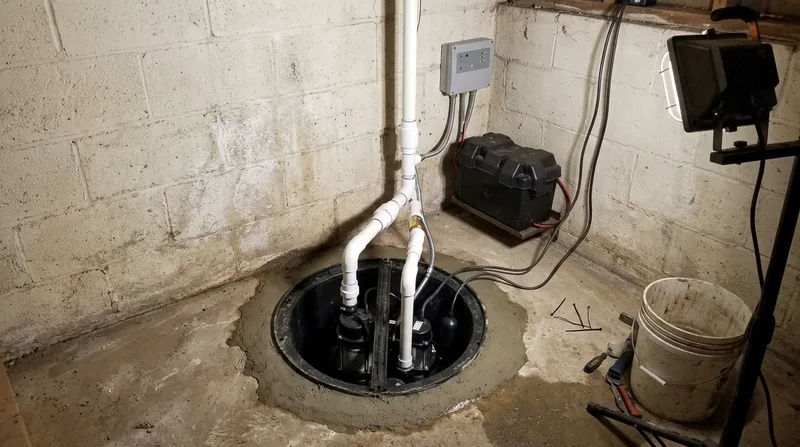




Springfield's older east and north-side streets, the Snyder Park area, and the hand-dug cellars under 1890s-1930s brick and frame houses all share one weak point: the sump pump is the only thing standing between a wet spring and a flooded basement. Battery Backup Sump Pumps in Springfield keep that pump running when the grid goes down, which is exactly when the Mad River valley gets its heaviest rain. Glacial clay and till shed water slowly and push it toward your foundation, and the creeks rise fast after a storm. A primary pump with no backup is a single point of failure. We size a backup to your existing pit, wire it to a dedicated battery, and test it under load before we leave. If your primary pump is already aging out, start with sump pump installation and replacement and add the backup in the same visit.
Why a Backup Pump Matters on Springfield's Clay and Older Foundations
Most power outages in Clark County arrive with the same storm that dumps two inches of rain on frozen or saturated ground. In the older neighborhoods, stone and early block foundations already weep under hydrostatic pressure, and the sump basin fills faster than a single pump can clear it. On the west and south-side ranches, poured walls crack as the ground shifts and let water in right at the footing. When the pump stops, the basin overflows in minutes.
- Spring storms knock out power exactly when the water table is highest and the basin refills fastest.
- Freeze-thaw cycles open cracks in older masonry, so spring snowmelt reaches the footing drain sooner.
- Hand-dug cellars and shallow 1940s-1960s basements have little freeboard before water reaches the floor.
- A failed check valve or a tripped breaker turns a working pump into a silent one during a storm.
A backup system does not fix a wet basement on its own, but it buys the hours you need to react before water spreads across the floor.
Key info: A homeowner near Snyder Park lost power for six hours during a July storm and came back to four inches of water. The primary pump was fine. The circuit breaker had tripped, and nothing was watching the pit.
For the official word on electrical and plumbing permits around sump discharge, check the City of Springfield building department before any work alters the discharge line.
How We Install a Backup System in a Springfield Basement
We start by looking at what you already have: pit size, primary pump model, discharge routing, and whether the basin has room for a second float. In older Springfield homes the pit is often a repurposed crock or a shallow concrete basin, and that changes which backup fits. We test the primary pump under load, then build the backup around it so the two do not fight each other.
- We inspect the sump basin, the check valve, and the discharge line for restrictions or backflow risk.
- We measure the pit and confirm the backup pump and float will clear the lid and the primary float.
- We mount the battery box on a shelf or wall bracket above flood level, not on the floor.
- We wire the charger to a dedicated circuit and test the transfer switch under simulated outage.
- We run a live fill test so you see the backup cycle on its own before we pack up.
If the pit itself is undersized or the primary pump is on its last season, we say so plainly and quote the pair together rather than selling a backup that will not keep up. A backup on a weak primary pump is a false sense of security.
Key info: On a 1950s ranch off Bechtle Avenue, the existing pit was a shallow concrete crock with no lid clearance. We set a low-profile backup pump and moved the battery to a wall bracket, and the system cycled cleanly through a simulated outage the same afternoon.
When the real problem is water volume rather than power loss, an interior drain tile system moves the water to the basin before it reaches the floor.
Backup Pump Options We Install
Not every basement needs the same setup. A finished basement with a finished floor and stored belongings justifies a larger battery and an alarm. A bare 1920s cellar with a floor drain may only need a modest backup and a high-water alert. We match the system to the pit and to how you use the space.
| Approach | Description | Best for |
|---|---|---|
| Battery backup pump with float switch | A DC pump on its own float, wired to a charged battery and charger. | Older Springfield pits with room for a second float and a standard discharge line. |
| Combination primary and backup unit | One housing with an AC primary pump and a DC backup in the same basin. | Replacing an aging pump and adding backup in a single visit. |
| High-water alarm and battery monitor | Audible alarm on water level plus a status light on battery charge. | Finished basements and homes where nobody is around during storms. |
| Extended battery bank | Larger deep-cycle battery or a second battery for longer outages. | Low-lying yards near the Mad River where outages run long. |
Each option gets tested under a simulated outage before we call the job done, because a backup you have never seen run is just a box on a shelf.
Battery Backup Sump Pumps Cost in Springfield: What to Expect
Most Springfield homeowners land somewhere between a basic battery backup and a full combination unit, and the spread comes down to the pit, the battery, and whether the primary pump is replaced at the same time. A straightforward backup on a sound primary pump starts from $900. A shallow hand-dug cellar pit, a long discharge run, or a finished basement that needs an alarm and a larger battery bank all push the number up.
- Pit condition and depth determine whether a standard or low-profile pump fits.
- Battery capacity and charger quality drive the long-term reliability of the system.
- Adding a high-water alarm or a second battery raises the total but covers longer outages.
- Replacing the primary pump at the same time usually costs less than two separate visits.
Get two or three estimates and ask each contractor to show you the pump model, the battery size, and the warranty terms in writing. We publish our full breakdown on the pricing page so you can compare line by line.
Choosing a Waterproofing Contractor Near Me in Springfield
Basement work attracts plenty of generalists who will sell a backup pump without ever checking the pit or the discharge line. Ask whether the company is licensed and insured, whether the crew is their own or subcontracted, and whether they will put the pump model and battery size in the written estimate. A contractor who cannot answer those questions plainly is not the one you want in your basement during a storm season.
- Confirm current licensing and liability insurance, and ask for a certificate before work starts.
- Get two or three written estimates that name the equipment and the warranty terms.
- Ask for references from Springfield jobs with the same foundation type as yours.
- Check whether a permit is needed for any change to the sump discharge or the electrical connection.
We are a dedicated basement waterproofing contractor, not a general foundation firm and not a plumber, and we will tell you when a simpler fix is the honest answer. Reach out through the contact page to schedule a look at your pit.
Battery Backup Sump Pumps in Springfield: Pricing Guide
| Service | Price | Details |
|---|---|---|
| Battery backup pump on existing sound primary | Starting at $900 | Includes DC backup pump, float, battery, charger, and a live outage test in your existing pit. |
| Combination primary and backup unit | Starting at $1,450 | Replaces an aging AC pump and adds DC backup in one housing, with check valve and discharge refit. |
| Backup with high-water alarm and battery monitor | Starting at $1,150 | Adds audible water-level alarm and charge status light for finished basements and storm-season peace of mind. |
| Extended battery bank for long outages | On estimate | Needs an on-site look at pit clearance, battery placement, and how long your area typically loses power. |
| Travel | Included | In Springfield and surrounding areas, no separate call-out or mileage fee. |
| Estimate | Free | Response within 24h at (937) 688-1966, no obligation to book. |
Indicative pricing, the exact cost depends on square footage, finish, and site access. Free personalized estimate within 24h at (937) 688-1966.


