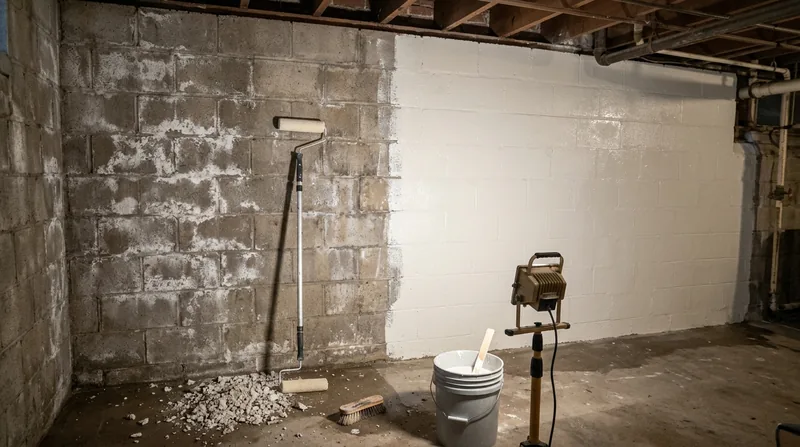




Basement Wall Sealing in Springfield: Stopping Damp Walls Before They Get Worse
Springfield sits in the Mad River valley of Clark County, where glacial clay and till shed water slowly and push it toward basement walls every spring. The older east and north-side streets, plus the Snyder Park area, are full of 1890s-1930s houses with full basements under brick or frame walls, stone or early block foundations, and hand-dug cellars that were never sealed to begin with. On the west and south sides, 1940s-1960s ranches and split-levels have poured or block walls that crack as the ground shifts with freeze-thaw cycles. If you are dealing with Basement Wall Sealing in Springfield, the first thing to understand is that a sealer is a surface treatment, not a cure for hydrostatic pressure. We apply penetrating and membrane sealers to damp walls after proper surface prep, and we tell you plainly when sealing will solve the problem and when the water is coming from outside the wall. Start with a free basement inspection so we can identify the actual source before anyone opens a bucket.
Why Basement Wall Sealing Matters on Springfield's Clay and Old Masonry
The ground here is mostly glacial clay and till. It does not drain quickly, so after a heavy storm or a fast snowmelt, water stacks up against the footing and pushes inward. In the older neighborhoods, that pressure shows up as efflorescence, white salt bloom, damp patches, and a musty basement smell that never quite goes away. In the newer subdivisions on graded glacial till, shallower basements and walkout lots seep at the wall base after rain. Sealing helps when the wall itself is damp and porous; it does not stop water that is being driven through cracks and cold joints by hydrostatic pressure.
- We remove efflorescence and loose parging before any sealer touches the wall, because sealer over salt bloom will peel.
- We use penetrating sealers on bare masonry and membrane coatings on block walls that need a continuous film.
- We check for active crack movement and call it out, since a sealer cannot bridge a crack that is still opening.
- We tell you when the wall needs foundation crack repair with epoxy or polyurethane injection instead of a coating.
- We flag grading and downspout extension issues, because roof water dumped at the foundation undoes any sealer.
Sealing is the right call for minor dampness and surface porosity. It is the wrong call when water is entering under pressure, and we say so on the spot.
Key info: A homeowner on the east side near Snyder Park had white efflorescence on a stone foundation and assumed the wall was failing. The wall was damp but sound. We removed the bloom, sealed the masonry, and extended two downspouts. No excavation was needed. That is a sealing job, not a drain tile job.
For official guidance on permits and contractor rules in Ohio, check the Ohio Department of Commerce and your local building department before any structural work begins.
How We Handle Basement Wall Sealing in Springfield, Step by Step
We do not sell a sealer as a cure-all. The process starts with a walkthrough of the basement and the exterior grade, because the wall tells you only half the story. We look at the water table behavior after storms, the condition of the drain tile and footing drain if visible, and whether the dampness is uniform or concentrated at cracks and the wall-floor joint. Then we choose the method that matches the problem.
- We inspect the wall, the floor joint, and the exterior grade, and we note any active cracks or bowing.
- We remove efflorescence, loose parging, and any failing coatings with wire brushes and masonry prep.
- We fill and repair surface defects so the sealer has a sound substrate to bond to.
- We apply the penetrating or membrane sealer in the correct number of coats for the wall material.
- We correct grading and downspout extension where roof water is feeding the wall.
- We give you a written summary of what was sealed and what to watch for next spring.
Every step is documented so you know exactly what was done and why.
Key info: A 1950s ranch off the west side had damp block walls after every rain but no standing water. We sealed the block, corrected the grade, and recommended a sump pump installation only after the next wet season showed the wall base still seeping. Sealing bought time and answered the question honestly.
Sealing Methods We Use on Springfield Basements
Not every wall takes the same product. Stone, early block, poured concrete, and brick each behave differently under moisture, and the wrong sealer traps water and makes the problem worse. This table shows the main approaches and where each one fits.
| Approach | Description | Best for |
|---|---|---|
| Penetrating sealer | Soaks into masonry pores and reacts to block capillary water without a surface film. | Damp bare block and poured walls with minor seepage. |
| Membrane coating | Flexible film that bridges hairline cracks and resists mild movement. | Block walls with surface dampness and fine cracking. |
| Epoxy injection | Structural fill for tight, non-leaking cracks in poured concrete. | Cracks that have stopped moving but need structural bonding. |
| Polyurethane injection | Flexible foam that seals active leaks and fills voids behind the wall. | Wet, active cracks and leaking wall-floor joints. |
| Parging repair plus sealer | Replaces failed mortar coat before sealing the masonry. | Older stone and brick foundations with crumbling parging. |
We choose the method after the inspection, not before, because the wall material and the water source dictate the answer.
Basement Wall Sealing Cost in Springfield: What to Expect
Most basement wall sealing jobs in Springfield start around $1,500, and that figure covers surface prep, efflorescence removal, and a quality sealer applied correctly. The price moves up with wall length, the number of coats required, the condition of the parging, and whether we find active cracks that need injection first. A small single-wall job on a 1940s ranch is at the low end. A full perimeter on a large stone foundation near Snyder Park, with heavy efflorescence and failed parging, sits well above the starting point. We do not quote a number before we see the wall, because a sealer applied to a wet, pressure-driven wall is money wasted.
Get two or three estimates and compare what is actually included. A low bid that skips surface prep or uses a cheap coating will peel within a season. Our pricing overview lays out the ranges so you can compare apples to apples.
Hiring a Basement Wall Sealing Contractor Near Springfield: What to Check
Basement wall sealing is not a job for a general handyman with a bucket of sealer. The person you hire should be able to read the wall, identify hydrostatic pressure versus surface dampness, and tell you when sealing is not the answer. Ask for proof of licensing and insurance, and get at least two references from jobs in Springfield or the surrounding towns like Urbana, Xenia, or Fairborn. Confirm whether the work touches drainage or a sump discharge, since altering drainage or the sanitary connection may require a permit from the local building department. Ask about warranty terms in writing, and make sure any transferable warranty is spelled out before you sign. You can contact us for a free, no-obligation estimate and a straight answer about what your wall actually needs.
Basement Wall Sealing Near Me: What Springfield Homeowners Should Know
When you search for basement wall sealing near me, you will find plenty of companies that will coat a wall without diagnosing the source. In Springfield, the failure mode that dominates is spring hydrostatic pressure in glacial clay, followed by freeze-thaw cracking in older masonry. A sealer applied to a wall under pressure will fail, and the water will find the next weak point. We tell you which problem you have before we sell you anything, and if the answer is an interior drain tile system rather than a sealer, we say so. That is the difference between a waterproofing specialist and a coating crew.
Basement Wall Sealing in Springfield: Pricing Guide
| Service | Price | Details |
|---|---|---|
| Single wall sealing | Starting at $1,500 | Surface prep, efflorescence removal, and one coat on a standard block or poured wall. |
| Full perimeter sealing | Starting at $2,800 | All four walls prepped and sealed, with parging repair where the mortar coat has failed. |
| Stone or brick foundation | On estimate | Older masonry needs repointing and parging before sealing, so we look first. |
| Crack injection before sealing | Starting at $450 | Epoxy or polyurethane injection for active cracks, priced per crack and depth. |
| Travel | Included | In Springfield and surrounding areas, no separate call-out or mileage fee. |
| Estimate | Free | Response within 24h at (937) 688-1966, no obligation to book. |
Indicative pricing, the exact cost depends on square footage, finish, and site access. Free personalized estimate within 24h at (937) 688-1966.


