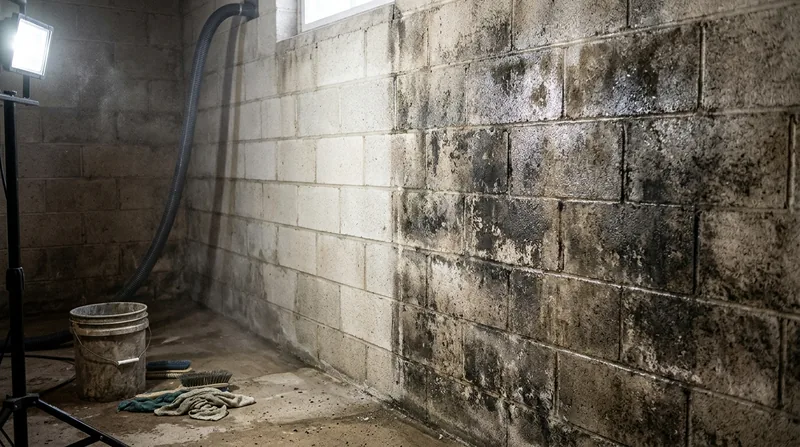




If you smell that damp, earthy odor every time you walk down the stairs, you are not imagining it. Basement mold remediation in Springfield starts with finding the water source, because mold in a Mad River valley basement is a moisture problem long before it is a cleaning problem. The older brick and frame houses on the east and north sides and around Snyder Park sit on stone and early block foundations that wick groundwater all spring. West and south-side ranches from the 1940s through the 1960s have poured walls that crack as the glacial clay shifts. We treat the affected surfaces, contain the work area, and then fix the seepage so the growth does not come back. Call (937) 688-1966 for a free basement inspection and a straight answer on what is feeding the mold.
Why Basement Mold Keeps Coming Back in Springfield's Older Housing Stock
Springfield sits on glacial clay and till that sheds water slowly, so every spring thaw and every heavy storm pushes water toward foundation walls instead of draining away. In the 1890s to 1930s houses, that water finds mortar joints and hand-dug cellar walls. On the west side, freeze-thaw cycles open hairline cracks in poured walls that seep quietly all winter. Mold only needs a damp surface and still air, and a basement with a failed sump pump or a clogged footing drain gives it both.
- Hydrostatic pressure forces water through block cores and mortar, keeping the lower wall permanently damp.
- Efflorescence and white salt staining on the wall tell you moisture is moving through the masonry right now.
- A musty basement smell usually means growth on joists, sill plates, or stored items, not just on the visible wall.
- Sump pump failure during a spring storm leaves standing water that soaks framing and drywall within a day.
- Warm, humid summer air hitting a cold basement wall condenses and feeds surface mold even without a leak.
We diagnose which of these is actually happening before we treat anything, because cleaning mold off a wall that is still wicking water is wasted money.
Key info: A 1920s brick house near Snyder Park had mold climbing the lower three block courses every June. The cause was a collapsed clay drain tile at the footing, not condensation. Sealing the wall alone would have failed by the next spring.
Ohio's building codes and local permit rules are administered by the city; check the City of Springfield building department for current requirements before any structural or drainage work begins.
How We Run Basement Mold Remediation in Springfield, Step by Step
Our process is built around one rule: no remediation without a moisture fix, or the mold returns. We start with a full below-grade inspection, including a musty smell diagnostic that traces odor to its source rather than masking it. Then we contain, treat, and correct the water path. The sequence matters, and skipping a step is how homeowners end up paying twice.
- We inspect the basement walls, floor, joists, and sill area and measure moisture with a meter to map the wet zones.
- We identify the water source: wall seepage, a failed sump pump, a backed-up drain tile, or condensation from humid air.
- We set up containment with plastic sheeting and negative air pressure so spores do not spread to the rest of the house during work.
- We remove porous materials that cannot be saved, such as soaked drywall, insulation, and cardboard.
- We treat affected framing and masonry surfaces with a remediation product and HEPA-vacuum the whole area.
- We correct the moisture path with the right fix, whether that is crack injection, an interior perimeter drain, a new sump pump, or a vapor barrier.
- We verify dryness with a final moisture reading and walk you through what to watch for next spring.
The moisture correction is the part that makes the remediation last, and it is the part most one-day mold companies skip.
Key info: In a 1950s ranch off the west side, mold covered the bottom two feet of a block wall every summer. The fix was an interior drain tile system tied to a new sump basin, not exterior excavation. The wall has stayed dry since.
Remediation and Moisture-Control Methods We Use
Not every basement needs the same approach. A single damp corner calls for a different fix than a wall that weeps across its full length every March. Here is how the main methods compare, and which conditions each one suits.
| Approach | Description | Best for |
|---|---|---|
| Surface treatment and containment | Contain the area, HEPA-vacuum, and treat affected framing and masonry with a remediation product. | Light surface growth on joists and walls with a known, correctable water source. |
| Crack injection plus wall sealing | Seal the seepage path with epoxy or polyurethane injection, then apply a breathable wall coating. | Isolated cracks and damp patches on poured or block walls. |
| Interior perimeter drain and sump | Cut an interior drain along the footing, lead it to a sump basin, and discharge it away from the house. | Hydrostatic pressure pushing water through the whole wall base. |
| Vapor barrier and dehumidification | Install a vapor barrier and control indoor humidity to stop condensation on cold walls. | Summer condensation and damp air with no active leak. |
The right method depends on what the moisture meter and the wall tell us, not on a package price.
Basement Mold Remediation Cost in Springfield: What to Expect
Most basement mold remediation jobs in Springfield start around $1,500, and that figure covers containment, treatment of the affected area, and the moisture diagnosis that tells us why the mold grew. The final number depends on how much square footage is affected, how many porous materials have to come out, and whether the water fix is a simple crack injection or a full interior drain system. A single damp corner in a Fairborn ranch is a very different job from a hand-dug cellar near Snyder Park with growth across three walls.
Get two or three written estimates and compare what each one includes, especially whether the moisture correction is in the scope or billed separately later. A low number that only cleans surfaces will cost more in the long run. Our full pricing overview breaks down how each part of the job is priced.
Choosing a Basement Mold Remediation Contractor Near Me in Springfield
Mold work and waterproofing overlap, and not every company that cleans mold understands why it grew. When you are comparing contractors near Springfield, ask what they will do about the water, not just the growth. A company that only treats surfaces without addressing seepage is selling you a repeat visit.
- Confirm the contractor is licensed and insured and ask for a certificate of insurance before work starts.
- Get at least two or three estimates in writing and compare scope line by line, not just the total.
- Ask for local references from Springfield or Clark County basements similar to yours.
- Ask who pulls any permit required for structural or drainage work, and verify with the city building department.
- Get the warranty terms in writing, including whether it transfers if you sell the house.
You can reach us at (937) 688-1966 to schedule a free inspection and get a written scope before you commit to anything.
Basement Mold Remediation in Springfield: Pricing Guide
| Service | Price | Details |
|---|---|---|
| Surface treatment and containment | Starting at $1,500 | Covers containment, HEPA vacuuming, and treatment of affected framing and masonry up to a set square footage. |
| Remediation with crack injection | Starting at $2,200 | Adds epoxy or polyurethane injection of the seepage cracks that feed the growth, priced per crack. |
| Remediation with interior drain and sump | On estimate | Full perimeter drain and sump scope depends on basement length, footing condition, and discharge route. |
| Travel | Included | In Springfield and surrounding areas, no separate call-out or mileage fee. |
| Estimate | Free | Response within 24h at (937) 688-1966, no obligation to book. |
Indicative pricing, the exact cost depends on square footage, finish, and site access. Free personalized estimate within 24h at (937) 688-1966.


