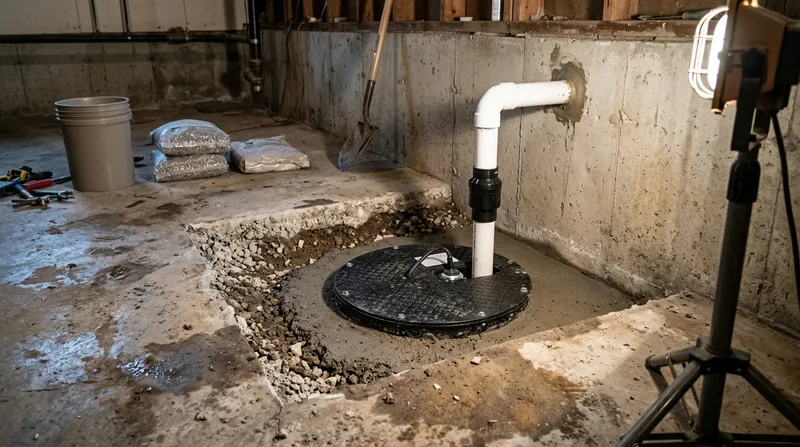




Sump Pump Installation & Replacement in Springfield: What Your Basement Actually Needs
Springfield sits in the Mad River valley of Clark County, and the ground here is mostly glacial clay and till that sheds water slowly and pushes it toward your foundation every spring. If you own one of the 1890s-1930s houses on the older east and north-side streets or near Snyder Park, you likely have a full basement under brick or frame walls, often with stone or early block foundations and a hand-dug cellar that was never designed for a modern water table. Sump Pump Installation & Replacement in Springfield is the work of getting that water out of the basement and away from the house before it becomes a wet basement, a failed pump, or a finished room you have to tear out.
We install new sump basins, replace burned-out or undersized pumps, and correct discharge lines that dump water back against the wall or freeze solid in January. We size the pump to the actual inflow, seal the basin lid, set a proper check valve, and route the discharge to a freeze-protected outlet. If the real problem is hydrostatic pressure coming through the cove joint, a pump alone will not fix it, and we will tell you that plainly. Start with a free basement inspection and we will show you what the water is doing.
Why Sump Pump Failure Hits Springfield Basements Hard
The failure mode that dominates in Springfield is not a slow seep. It is a pump that quits during a spring storm or a fast rise on the Mad River, when the clay is already saturated and the water table is up against the footing. Older east-side and north-side basements with stone or early block walls take on water through the mortar joints and the cove, and a pump that cycles constantly will burn out its switch within a season or two. West and south-side ranches from the 1940s through the 1960s have poured or block walls that crack as the ground shifts, and those cracks feed the sump pit faster than a builder-grade pump can keep up with.
- A pump that runs nonstop during spring runoff overheats and trips its thermal overload, then quits for good.
- Undersized basins fill with silt and gravel, which jams the impeller and shortens pump life.
- Discharge lines that end at the foundation wall send water right back into the same clay soil.
- Unsealed basins let soil gas and humid air into the basement and make the pump work harder.
- No battery backup means a power outage during a summer storm leaves the pit filling with nobody watching.
Any one of these turns a manageable wet basement into a flooded floor, and the fix is usually a correctly sized pump in a sealed basin with a discharge line that actually gets water away from the house.
Key info: On the older streets near Snyder Park and the north side, we routinely find hand-dug cellars with no basin at all, just a low spot in the floor. A new sump pit cut into that floor and tied to the footing drain is often the difference between a dry spring and a wet one.
Permits for work that alters drainage or the sanitary connection of a sump discharge vary by jurisdiction, so confirm the current rules with the City of Springfield building department before work begins. You can find the local permit office through the City of Springfield, Ohio website.
How We Install or Replace a Sump Pump in Springfield
We start by watching the water, not by quoting a pump. On a west-side ranch with a cracked block wall, that means checking where the water enters and how fast the pit refills after we pump it down. On an older brick house near the fairgrounds, it means looking at the footing drain and whether the original weeping tile is still open or crushed. The steps below are the same on every job, whether it is a simple replacement or a new pit cut into a cellar floor.
- We inspect the basement, the pit, and the discharge route, and we measure the actual inflow rate.
- We size the pump and basin to the inflow, not to whatever is on the shelf at the hardware store.
- We cut and set a new basin with a sealed lid, or clean and re-set the existing pit if it is sound.
- We install the pump, check valve, and float switch, and we test the cycle under load.
- We route the discharge line to a freeze-protected outlet and correct grading or downspout extensions at the same time.
- We test the system with water and walk you through the check valve and the backup before we leave.
If the inspection shows that water is coming through the wall itself rather than the floor, we will point you to interior drain tile as the better answer, because a pump in a dry pit does nothing for a wet wall.
Key info: A homeowner in Enon had a pump that ran every 40 seconds after a June storm. The discharge line ended two feet from the foundation, so the same water was coming right back. We re-routed it to a pop-up emitter at the curb and the cycle time went to once every 20 minutes.
Approaches We Use for Sump Pump Installation & Replacement in Springfield
Not every wet basement needs the same hardware. The table below shows the approaches we use most often in Springfield and the situations each one fits, so you can see where your house lands before we ever show up.
| Approach | Description | Best for |
|---|---|---|
| Direct replacement | Pull the old pump, clean the pit, and set a correctly sized pump with a new check valve. | A sound basin and a pump that has simply reached the end of its life. |
| New pit and basin | Cut a new sump basin into the floor, tie it to the footing drain, and seal the lid. | Older Springfield cellars with no pit, or a pit that is silted and undersized. |
| Discharge line correction | Re-route the discharge to a freeze-protected outlet away from the foundation. | Pumps that short-cycle because water is being dumped back against the wall. |
| Battery backup add-on | Add a battery backup pump and alarm to the existing primary pump and basin. | Homes that lose power during summer storms and spring runoff. |
| Pump plus drain tile | Pair the pump with an interior perimeter drain when water is entering at the wall. | Basements with hydrostatic pressure and wet walls, not just a wet floor. |
Sump Pump Installation & Replacement Cost in Springfield: What to Expect
Most straightforward sump pump replacements in Springfield start at $1,200, and that figure covers a correctly sized pump, a new check valve, a sealed lid, and a tested discharge line. A new pit cut into an older cellar floor, a battery backup add-on, or a discharge line that has to be re-routed under a sidewalk will move the number up from there. The biggest cost drivers are the condition of the existing basin, how far the discharge has to travel, and whether the water is coming through the floor or the wall.
Two or three estimates is the smart move, and not because the cheapest one wins. Ask each contractor what pump they are specifying, how they sized it, and where the discharge will end. A quote that does not mention the check valve or the discharge route is not a complete quote. You can see the full breakdown on our pricing page before you call.
Key info: A South Charleston homeowner got three quotes for a replacement. Two were for the same builder-grade pump with no check valve listed. The third specified a cast-iron pump sized to the inflow and a new discharge line. The difference in price was under $200, and the difference in how long the pump lasted was measured in years.
Hiring a Sump Pump Contractor Near Springfield: What to Check
When you search for a sump pump contractor near me in Springfield, the first thing to confirm is licensed and insured status, and then ask for the certificate, not just a verbal yes. Get at least two written estimates that name the pump model and the discharge route. Ask for references from jobs in your part of town, because a contractor who works the older east-side basements knows stone walls and a contractor who works new builds may not. Confirm who pulls any permit the work requires, and check with your HOA if you live in a subdivision with drainage restrictions.
Reach out through our contact page to set up a free estimate, and we will tell you honestly whether you need a new pump, a new pit, or something else entirely.
Sump Pump Installation & Replacement in Springfield: Pricing Guide
| Service | Price | Details |
|---|---|---|
| Sump pump replacement | Starting at $1,200 | Includes a correctly sized pump, new check valve, sealed lid, and tested discharge line. |
| New sump pit and basin | Starting at $1,800 | Cutting a new basin into an older floor and tying it to the footing drain moves the price up. |
| Battery backup add-on | Starting at $650 | Battery backup pump and alarm added to an existing primary pump and basin. |
| Discharge line correction | Starting at $450 | Re-routing the discharge to a freeze-protected outlet away from the foundation wall. |
| Complex or large-scale job | On estimate | Pump combined with interior drain tile or a crushed footing drain needs an on-site look first. |
| Estimate | Free | Response within 24h at (937) 688-1966, no obligation to book. |
Indicative pricing, the exact cost depends on square footage, finish, and site access. Free personalized estimate within 24h at (937) 688-1966.


