Why Older Homes in Springfield Are Prone to Foundation Issues
If you own a home in Springfield, there is a good chance your house has seen a few decades of Ohio weather. The freeze-thaw cycle here is hard on foundations. Water seeps into tiny cracks, freezes, expands, and then thaws, widening those cracks season after season. Older homes often have block or poured concrete foundations that were built before modern drainage standards, which makes them more vulnerable to movement and moisture intrusion.
Many historic neighborhoods around Springfield feature homes with original foundation walls that have never been retrofitted with proper drainage or waterproofing. Over time, soil settlement, tree roots, and poor gutter runoff all take a toll. Recognizing the early signs of foundation problems signs can save you from major structural repairs down the road. The basement is almost always where the story begins, so it pays to know what to look for.
Basement Wall Cracks: What They Mean and When to Worry
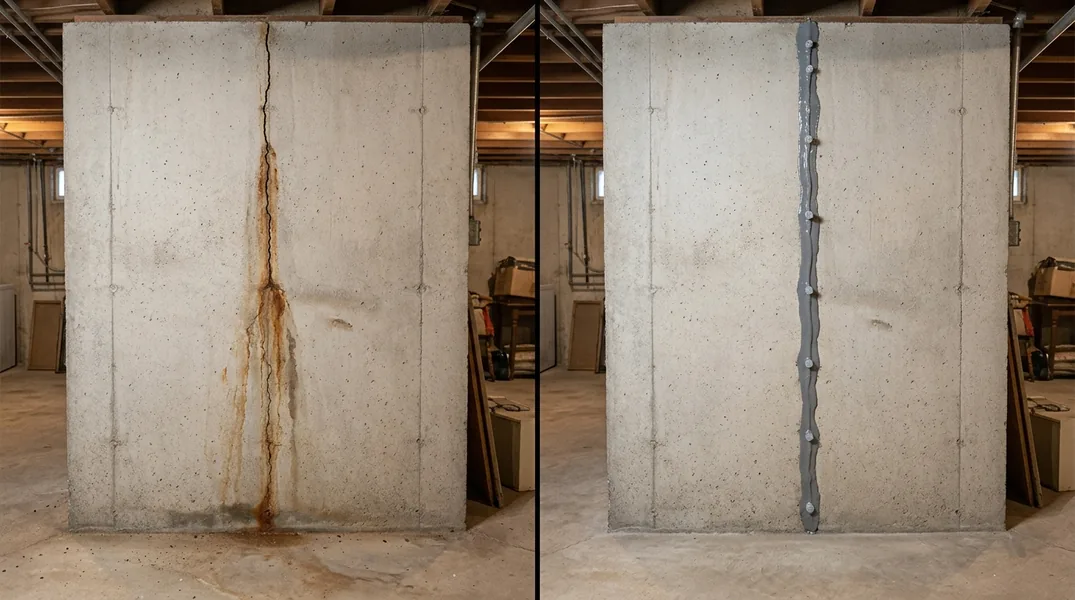
Not every crack is a crisis, but basement wall cracks deserve attention. Hairline vertical cracks are often caused by concrete shrinkage during curing and may be relatively harmless. However, horizontal cracks, stair-step cracks in block walls, or cracks that are wider than a quarter inch are red flags. These often indicate soil pressure pushing against the wall or settling that is stressing the structure. If you can see daylight through a crack or if it has grown since you last checked, it is time to call a professional.
In older Springfield homes, block foundations frequently develop stair-step cracks along the mortar joints. This pattern usually points to a bowing basement wall in progress. Bowing happens when hydrostatic pressure from saturated soil pushes the wall inward. Ignoring it can lead to serious structural failure. A qualified inspector can tell you whether the crack is cosmetic or a symptom of a deeper problem that needs Foundation Waterproofing to stabilize and protect the home.
Bowing Basement Walls and Other Structural Warning Signs
A wall that is visibly leaning or curving inward is one of the most serious signs of foundation trouble. You can check for bowing by holding a level or a straight edge against the wall, or simply by sighting along the wall from one corner. If the middle of the wall is noticeably farther from your straight edge than the top or bottom, the wall is bowing. Other structural clues include doors and windows that stick or no longer latch properly, floors that feel uneven or sloped, and gaps appearing around window frames in the basement.
These symptoms often go hand in hand with water problems. When the soil around a foundation becomes saturated, it expands and exerts pressure. That is why older home foundation repair frequently involves addressing both the structure and the water management system. In many cases, an Interior Drain Tile System can relieve hydrostatic pressure by redirecting groundwater away from the walls, while wall anchors or carbon fiber straps stabilize the bowing. The right solution depends on the severity, which is why an on-site evaluation matters.
Moisture, Mold, and Efflorescence: Clues You Should Not Ignore
Water is the enemy of every foundation, and older homes in Urbana and the surrounding areas often show it in subtle ways. White, chalky stains on basement walls (efflorescence) mean moisture is moving through the concrete and leaving mineral deposits behind. Musty odors, damp spots, and peeling paint on basement walls are all signs that water is finding its way in. Mold growth, especially black mold, is a health concern and a clear indicator that humidity levels are too high.
These moisture issues rarely fix themselves. In fact, they tend to worsen as the foundation continues to age. Historic home waterproofing requires a thoughtful approach that respects the original construction while adding modern protection. Depending on the situation, Exterior Basement Waterproofing may be the best way to stop water before it reaches the wall, while interior systems manage water that already gets in. A professional assessment will help you choose the right path.
Foundation Repair Near Me: When to Call a Springfield Professional
If you have spotted any of these warning signs, do not wait for the next heavy rain to make things worse. Small cracks and minor moisture problems are far less expensive to fix than bowed walls or collapsed foundations. A local professional who understands the soil conditions and housing stock in Springfield can give you an honest assessment and a clear plan. Whether your home is in Xenia or closer to downtown Springfield, the right contractor will inspect your basement, explain what is happening, and recommend a solution that fits your budget.
Springfield Waterproofing offers free estimate appointments for homeowners who want to know exactly what is going on with their foundation. You can reach us at (937) 688-1966 to schedule a visit. We will walk you through the findings, discuss options, and provide transparent pricing so you can make an informed decision. Protecting your older home starts with a simple conversation, and we are here to help.
Looking for a professional basement waterproofing contractor in Springfield? Springfield Waterproofing responds fast for all your basement waterproofing needs.
Get a Free QuoteOur services: Basement Waterproofing · Interior Drain Tile System · Exterior Basement Waterproofing